
Pottawatomie County Criminal Records
A criminal court record in Pottawatomie County is the District Court file opened after the State files a criminal complaint or information. The file is maintained by the Clerk of the District Court at the Pottawatomie County Justice Center in Westmoreland. It is broader than a single charge line. A public criminal case file can include the charging document, arraignment or first appearance entries, bond orders, motions, hearing notices, plea entries, trial settings, verdict or plea results, disposition, sentence, probation terms, court costs, restitution, and later expungement entries when a public entry remains.
The local court path starts with the Pottawatomie County District Court, which is part of the Kansas 2nd Judicial District with Jackson, Jefferson, and Wabaunsee counties. District Court handles state-law felony and misdemeanor criminal cases for the county. Municipal courts in Wamego, St. Marys, and Manhattan handle city ordinance, city traffic, and some misdemeanor-style city matters, so a city case may not appear first as a Pottawatomie County District Court criminal record. For a closer view of filed charges after an arrest, use the arrest records and charges page.
The County Attorney FAQ is important for reading criminal court records because it states that charges are filed by the State, not by a victim or private citizen. A victim may provide a notarized statement about why charges should be dropped, but the final charging choice remains with the prosecutor. That means the criminal court record should be read as the official case history, while police reports, jail records, and witness accounts may sit outside the court file or may be partly closed.
The County Attorney's Office prosecutes felony, misdemeanor, domestic battery, child in need of care, mental illness, and traffic matters. Its role helps explain why a criminal record may show charges that differ from the arresting officer's initial report.
Search Pottawatomie Criminal Cases
The main online route for public Pottawatomie County criminal court records is Kansas CaseSearch. The Kansas Judicial Branch says public district court case information and documents are available online as courts move into the centralized case management system. Courthouse terminal access is also available through district courthouses, and the local clerk can help locate local records within court-staff limits. Court staff cannot give legal advice or disclose confidential information.
- Start with Kansas CaseSearch for a public district court criminal case. Use the search options shown by the portal at the time of use.
- If only a hearing date is needed, use the Kansas Self-Help Hearing Calendar and search by case number, case title, defendant, prosecuting attorney, or defending attorney.
- If the matter is a city citation, ordinance case, city DUI, parking case, or municipal misdemeanor, check Wamego, St. Marys, or Manhattan Municipal Court instead of assuming District Court has the first record.
- For a certified copy or a file that is not online, contact the Clerk of the District Court at 785-457-3392 or visit the second floor of the Justice Center.
- For a statewide criminal-history abstract, use the KBI record check. That search is identity-based and is not the full court file.
The Kansas district court records page is the statewide source for public district court record access. The Pottawatomie County District Court address is 108 N 1st St., Second Floor, Westmoreland, KS 66549, with mailing address PO Box 129. The local court phone is 785-457-3392, fax is 785-457-2107, and the researched office hours are Monday through Friday, 8:00 a.m. to 4:00 p.m.
The County Attorney victim information page states that after law enforcement investigates a crime, the report is forwarded to the County Attorney for review and victims are notified by mail if and when charges are filed. That sequence is useful when a record search turns up no District Court case after an arrest. The prosecutor may still be reviewing the report, the matter may have been routed to municipal court, or no public charge may have been filed.
Pottawatomie Criminal Case Stages
A Pottawatomie County criminal court record changes as the case moves through District Court. The docket may start with a complaint or information, then add a first appearance, arraignment, bond action, motions, hearing settings, plea, trial event, disposition, and sentence. The County Attorney FAQ notes that first appearances in Pottawatomie County District Court are Tuesdays at 9:00 a.m. on the second floor of the Justice Center, so early docket entries may cluster around that first court setting.
Case flow: Charges Filed › Arraignment › Pretrial / Motions › Plea or Trial › Disposition › Sentencing
| Stage | What Happens |
|---|---|
| First appearance and arraignment | The defendant appears in court, bond and counsel issues may be addressed, and plea-related entries begin. |
| Pretrial and motions | The docket may show motions, orders, amended charges, hearing notices, discovery-related events, or diversion activity. |
| Plea or trial | The record shows whether the case ends by plea, bench trial, jury trial, dismissal, acquittal, or another public disposition. |
| Sentencing | Sentencing entries may list jail or prison terms, probation, fines, fees, restitution, and other conditions when public. |
The County Attorney's diversion page adds a local alternative path. Diversion is a supervised program before adjudication and is described as a privilege, not a right. Adult applicants submit an application, notarization, and a non-refundable $10 application fee. If diversion is active, a court or KBI entry may not mean a conviction. It signals that the case is being managed before final adjudication.
What Criminal Records Show
Because no Pottawatomie County CaseSearch sample could be opened during research without interactive portal access, the field list below is framed as the expected public criminal case information drawn from Kansas court and local source material. It should not be read as a guarantee that every criminal case screen shows every field. Sealed, expunged, juvenile, confidential, and redacted records may show less or may not appear online.
| Field | What It Shows |
|---|---|
| Case number | The court-generated identifier used for searching, copy requests, and docket tracking. |
| Court and county | Pottawatomie County District Court, a municipal court, or another Kansas court if the case is outside the local district file. |
| Case title and parties | Usually State or City versus the defendant, with attorneys or prosecutor information when public. |
| Charges | Filed offense names, statutes or ordinance references, severity, amendments, dismissals, or reductions when shown. |
| Docket events | Chronological entries such as complaint filed, hearing set, motion filed, order entered, warrant issued, plea, or sentencing. |
| Disposition and sentence | Public outcome details such as dismissal, conviction, diversion, probation, jail or prison term, fines, fees, or restitution. |
The victim information page is one local source for understanding why restitution or victim notice may appear in a criminal court file. The page states that victims may be notified by mail when charges are filed, can seek hearing notification, and may receive restitution information. Those entries belong to the court case record only when they are filed, ordered, or noted by the court.
The County Attorney victim information source at pottcounty.org documents the victim-notice side of local prosecution.
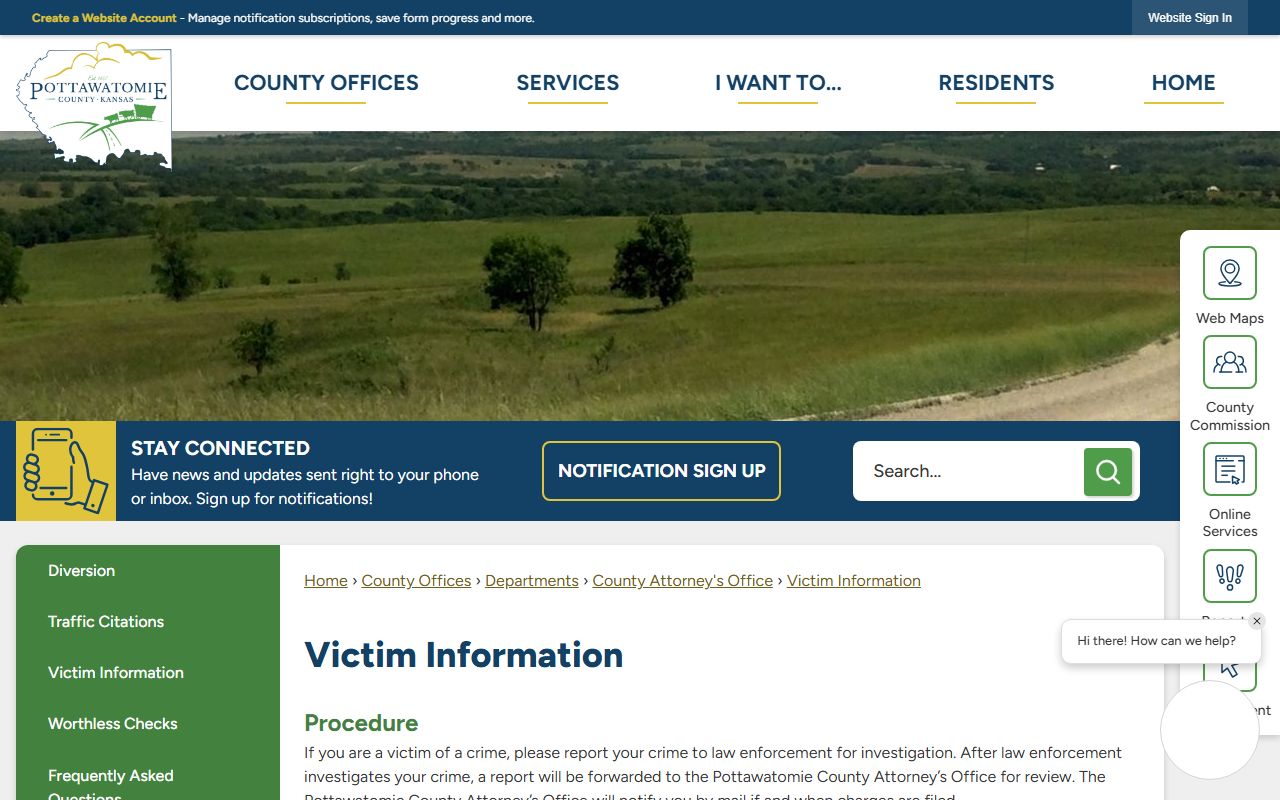
That source supports criminal record entries tied to charge filing notices, hearing notification, protection orders, restitution, and victim compensation rather than arrest-only data.
Charges vs. Convictions
A Pottawatomie County criminal court record may list an arrest, a filed charge, an active diversion, a dismissal, a conviction, and a sentence in the same case history. These are not the same thing. The research file is clear that a charge is an alleged offense filed by the prosecutor or city, while a conviction is a final finding or plea of guilt. A dismissed charge or successful diversion should not be treated as a conviction.
| Charge | Conviction | |
|---|---|---|
| Meaning | An alleged offense filed in court by the State or city. | A final guilty plea or finding entered by the court. |
| Where to verify | District Court or municipal court docket and charging document. | Court disposition, sentencing order, or public KBI history when released. |
| Possible result | May be pending, amended, dismissed, reduced, or diverted. | May lead to sentence, probation, costs, restitution, or later expungement. |
The County Attorney diversion source at pottcounty.org explains why a case may remain short of conviction while still appearing in a court or criminal-history workflow.
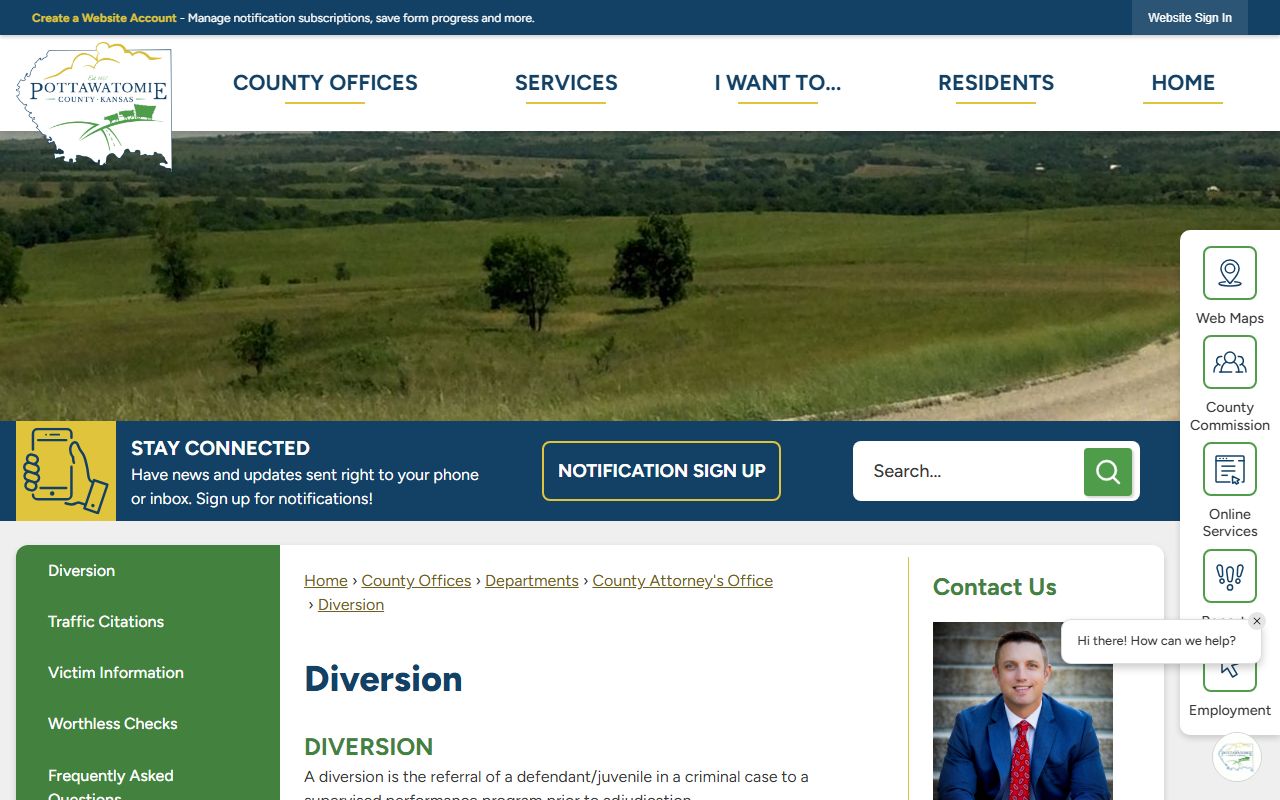
Diversion matters because a criminal record can show supervision, conditions, or an active diversion without showing a conviction.
Reading Dispositions and Sentences
Disposition means the result of a case or charge. In a Pottawatomie County criminal record, the disposition may be shown by charge, by count, or by final case event. A case can include more than one charge, so one count may be dismissed while another results in a plea or conviction. Sentencing follows conviction and may show jail, prison, probation, fines, fees, costs, restitution, or conditions. Bond entries are not sentences. They relate to appearance in court before the case is resolved.
When a record uses terms such as motion to revoke probation, failure to appear, no bond until court, or restitution, read the docket dates in order. A later order may change an earlier status. A warrant entry may appear because a person missed court, failed to comply with a sentence, or violated probation. The active warrant list is separate from the criminal case file and should be checked through Pottawatomie County warrant records when the question is current warrant status.
Sealed vs. Expunged Records
Restricted records need careful wording. A sealed record is closed from public view by law or court order. An expunged record is limited by an expungement order after statutory requirements are met. Kansas law allows eligible people to petition to expunge certain convictions, arrest records, and diversions, but the research notes waiting periods, exclusions, required petition details, notice to the prosecutor and arresting agency, and a court hearing.
| Sealed | Expunged | |
|---|---|---|
| Public view | Closed or limited because a statute, court rule, or order restricts access. | Generally not disclosed to the public after a granted expungement, subject to statutory exceptions. |
| Common reason | Juvenile, confidential, protected personal data, or court order. | Eligible conviction, arrest record, or diversion after Kansas waiting periods and court approval. |
| Where to ask | Clerk of the District Court or issuing municipal court. | Clerk of the District Court for filing-fee questions and Kansas Judicial Council forms for procedure. |
The expungement statute source at K.S.A. 21-6614 is the controlling Kansas reference for many criminal expungement questions.
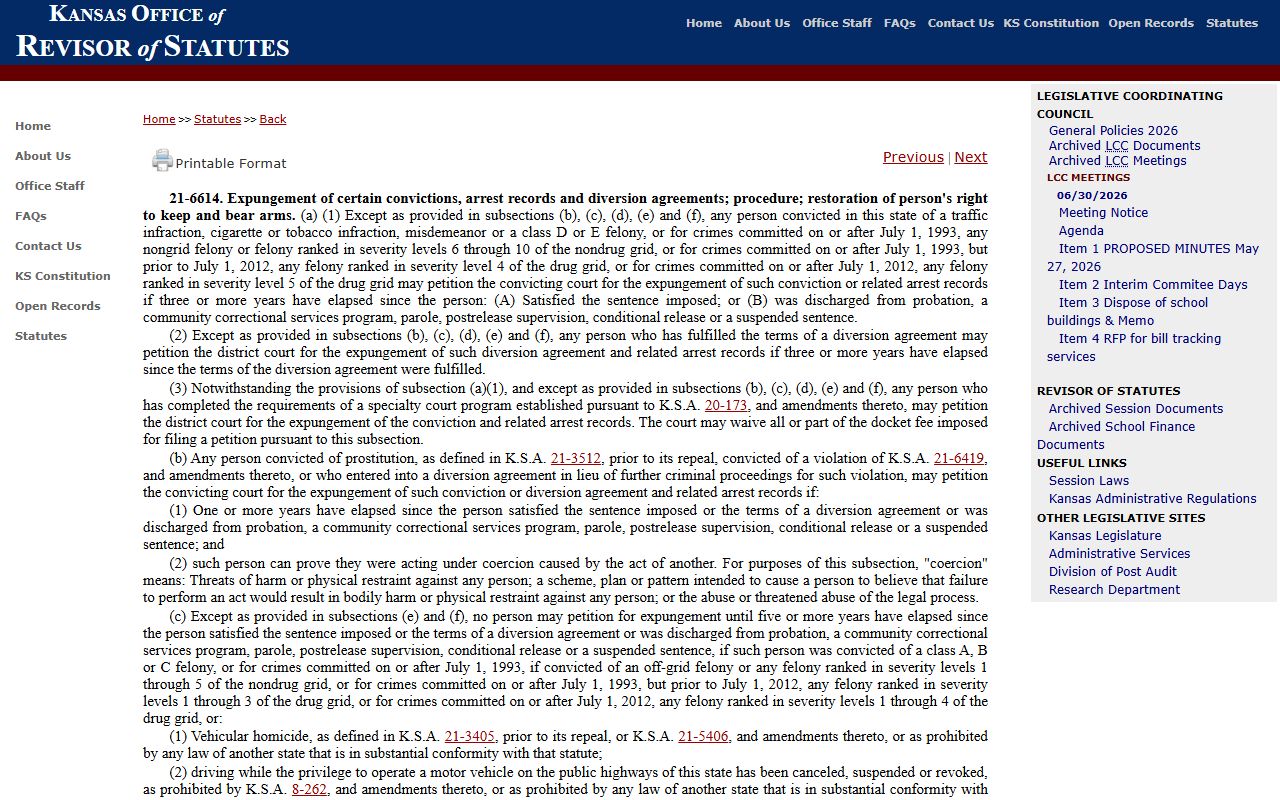
The statute source helps separate a sealed public display from an expungement order that limits release of an eligible criminal record.
Public Access to Criminal Court Records
Kansas public access uses more than one route. District Court criminal case records are searched through Kansas CaseSearch, courthouse terminals, and the local Clerk of the District Court. County-office records use the appropriate county custodian and the local Open Records Request process. Sheriff's reports use the Sheriff's Records Division process, which releases open portions of reports and may withhold investigative material to protect a criminal or potentially criminal case.
Key Statutes:
K.S.A. 45-215 et seq. generally opens Kansas public records unless a law closes or exempts them.
K.S.A. 45-221 lists categories that may be withheld, including records protected for privacy, investigation, or other legal reasons.
K.S.A. 38-2309 governs juvenile offender court records and keeps official juvenile files separate from other court records.
The Pottawatomie County Attorney FAQ source at pottcounty.org also directs criminal-history requests to the KBI and expungement filing-fee questions to the Clerk of the District Court.
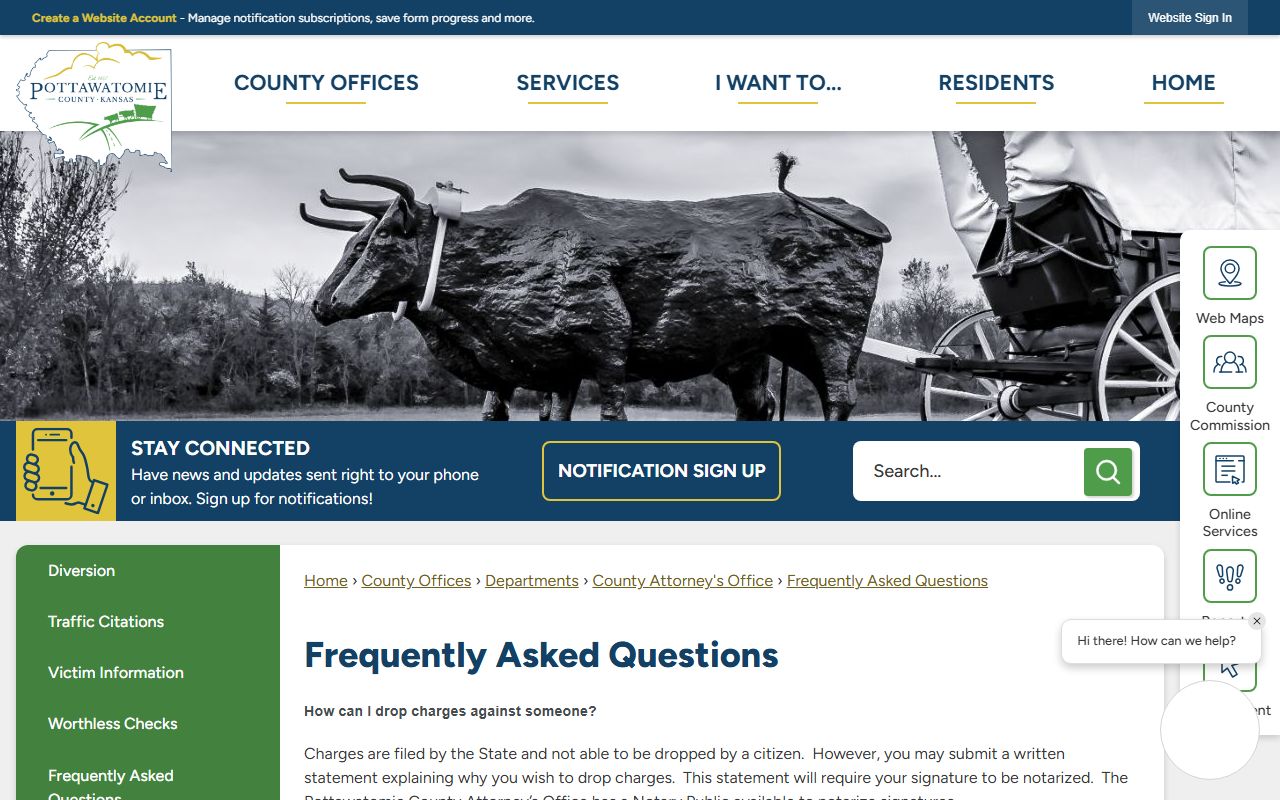
That local FAQ keeps criminal case access distinct from statewide criminal-history checks and from expungement filing questions.
Background Check Considerations
The Kansas Bureau of Investigation criminal-history record check is different from a Pottawatomie County criminal court record. KBI releases adult conviction criminal history, Kansas felony and misdemeanor convictions, some equivalent ordinance convictions, Kansas Department of Corrections confinements, arrests within the past 12 months when disposition has not been received, and active diversions not successfully completed. It does not release disposed arrests that did not result in conviction, successful diversions, expunged records, older arrests without disposition, or juvenile offender records to the public.
Important: Employment, tenant, credit, insurance, and other regulated screening must use lawful FCRA-compliant procedures.
The County Attorney office source at pottcounty.org identifies the prosecutor roles behind local felony and misdemeanor filings.
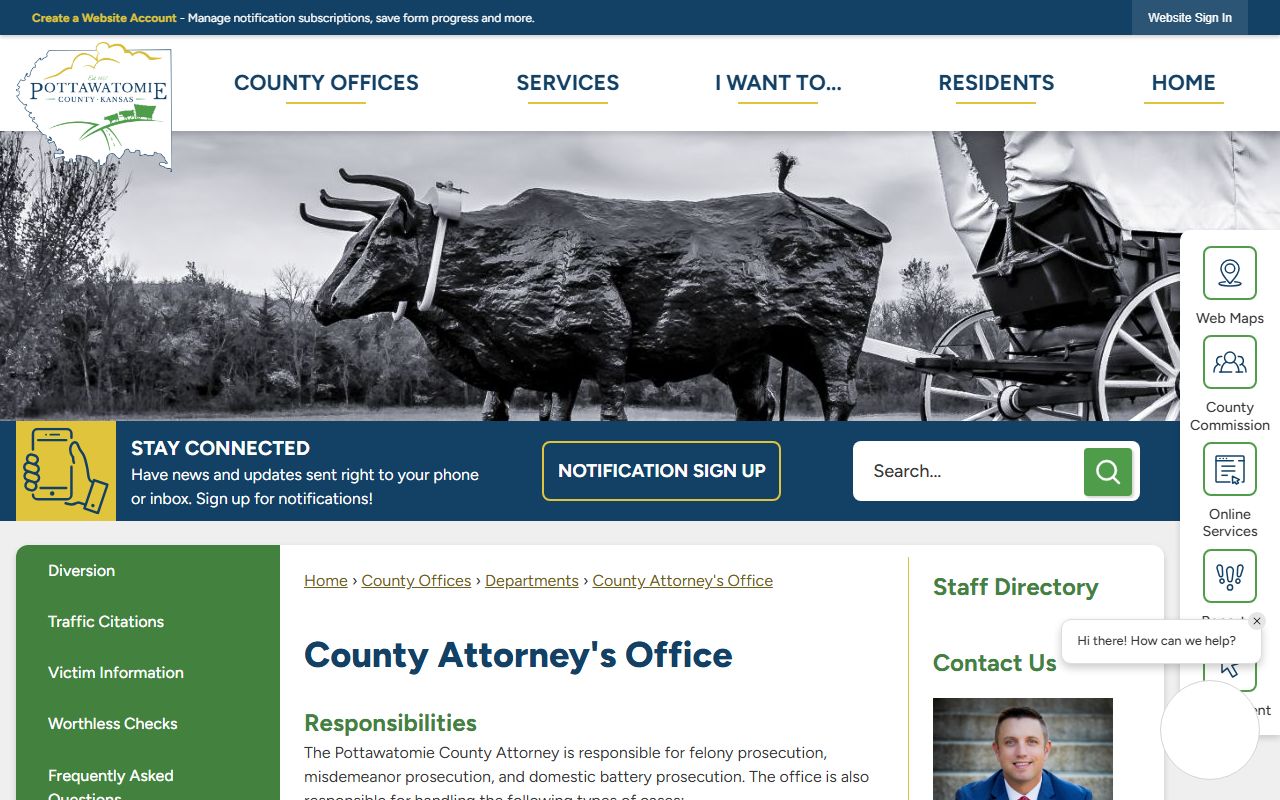
That office context explains why the criminal court case begins with prosecutor-filed charges rather than the arrest alone.
Restricted Pottawatomie Criminal Records
Juvenile criminal and law-enforcement records are not public in the same way adult records are. Sheriff's Records states juvenile reports are not open to the public under any circumstance, and KBI does not release juvenile offender records to the general public. Kansas juvenile offender court records are governed by K.S.A. 38-2309, and official juvenile files are kept separate from other court records.
Other limits can apply to sealed files, expunged records, mental health proceedings, protected personal identifiers, and investigative material. Sheriff's Records releases only open portions of reports, such as crash reports and front pages of offense reports, while investigative or case-sensitive material may be withheld. Court records may redact Social Security numbers, financial account numbers, protected addresses, minor names, medical details, and other protected data.
The juvenile offender statute source at K.S.A. 38-2309 documents the separate treatment of juvenile records in Kansas.
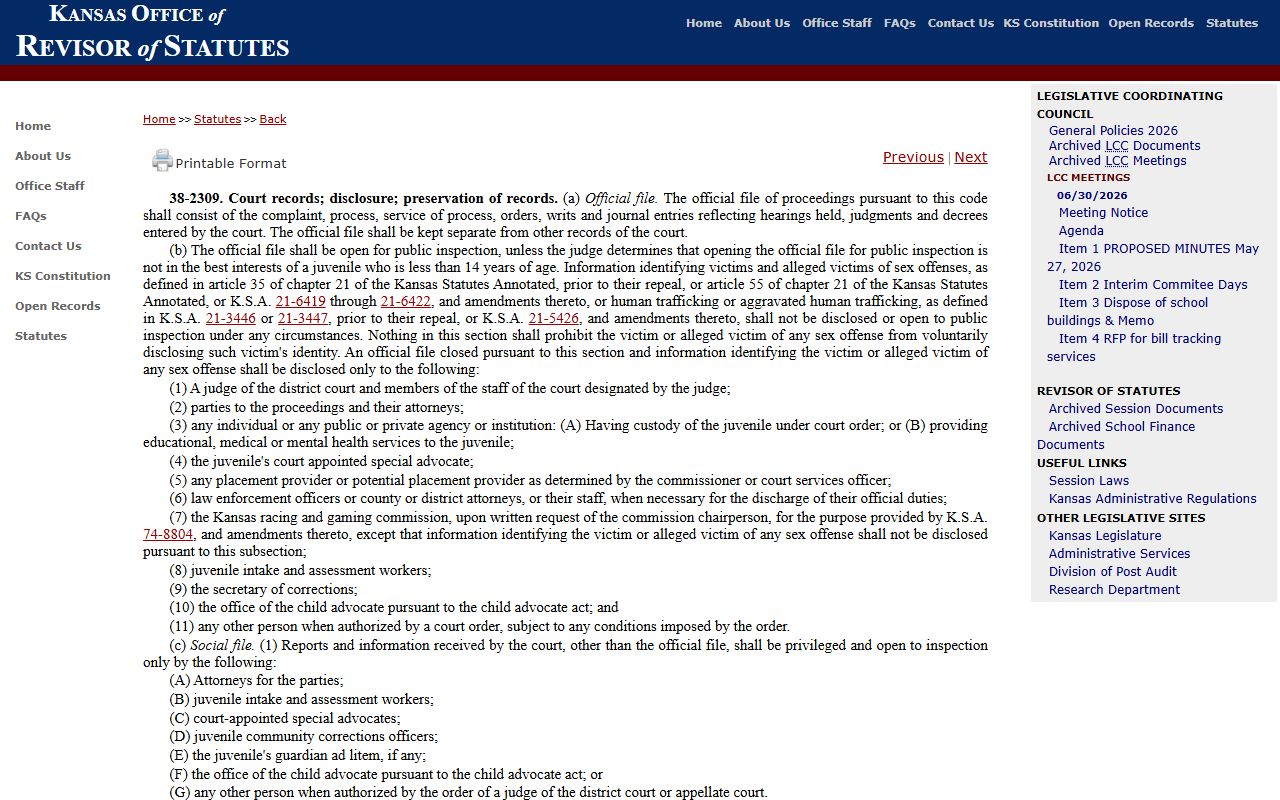
That restriction is why a missing public result may reflect legal limits rather than a missing or non-existent criminal court record.
Note: For custody status, use jail and VINE sources; for the final case outcome, use the criminal court file.